

Winter vs summer: adjusting your babe's sleep environment through the seasons
Here's the thing about the seasons: the comfortable range your babe sleeps in doesn't actually change. What changes is how hard you have to work to hold it. Winter and summer are just two different versions of the same job.
The range stays the same, the challenge changes
You'll see a comfortable range cited a lot, around 16 to 20 degrees, and it's worth knowing. But we don't prescribe a number, and neither does Red Nose. The point was never chasing a figure, it's dressing your babe for whatever the season is doing. What changes with the calendar is the effort to hold things comfortable, not a number you're aiming for.
Winter: warming without overdoing it
In the cold months it's about gentle, steady warmth and a cosier layer, a warmer TOG, rather than piling blankets on. Did you know? Winter is actually when rates of the risk of overheating is highest. Red Nose suggests checking the chest or back of the neck if you're ever unsure. There's more on the winter version in our guide to keeping your babe warm on a cold winter night.
Summer: staying comfortable safely
In the heat it's airflow, blinds during the day, and lighter layers at night. Dress your babe for the temperature in their environment, not what the outside temperature is.
Dressing to suit each season
The principle is the same year-round: match the layers to the environment. Our TOG and degree-by-degree guides give you the quick version for whatever the temperature's doing.
Seasons change what the room does overnight. The app updates the suggestion as it moves.
The same applies away from home. Here is tracking your babe's room conditions while travelling.
Shoulder seasons and overnight swings
Spring and autumn are sneaky, warm days and cool nights. The environment can swing a fair bit overnight, which is where a live reading helps. Orbie tracks the temperature where your babe sleeps and keeps the layer suggestion current as it shifts. Stay informed and set your own alerts, so you can know when things change, on your own terms.
This article is general information, not medical advice. If you're ever worried about your little babe, trust your gut and reach out to your GP, child health nurse, or Pregnancy, Birth and Baby on 1800 882 436.
Sources
- Red Nose Australia - How to dress baby for sleep
- Red Nose Australia - What is a safe room temperature for a sleeping baby?
- Okamoto-Mizuno K & Mizuno K (2012). Effects of Thermal Environment on Sleep and Circadian Rhythm. Journal of Physiological Anthropology. Read here
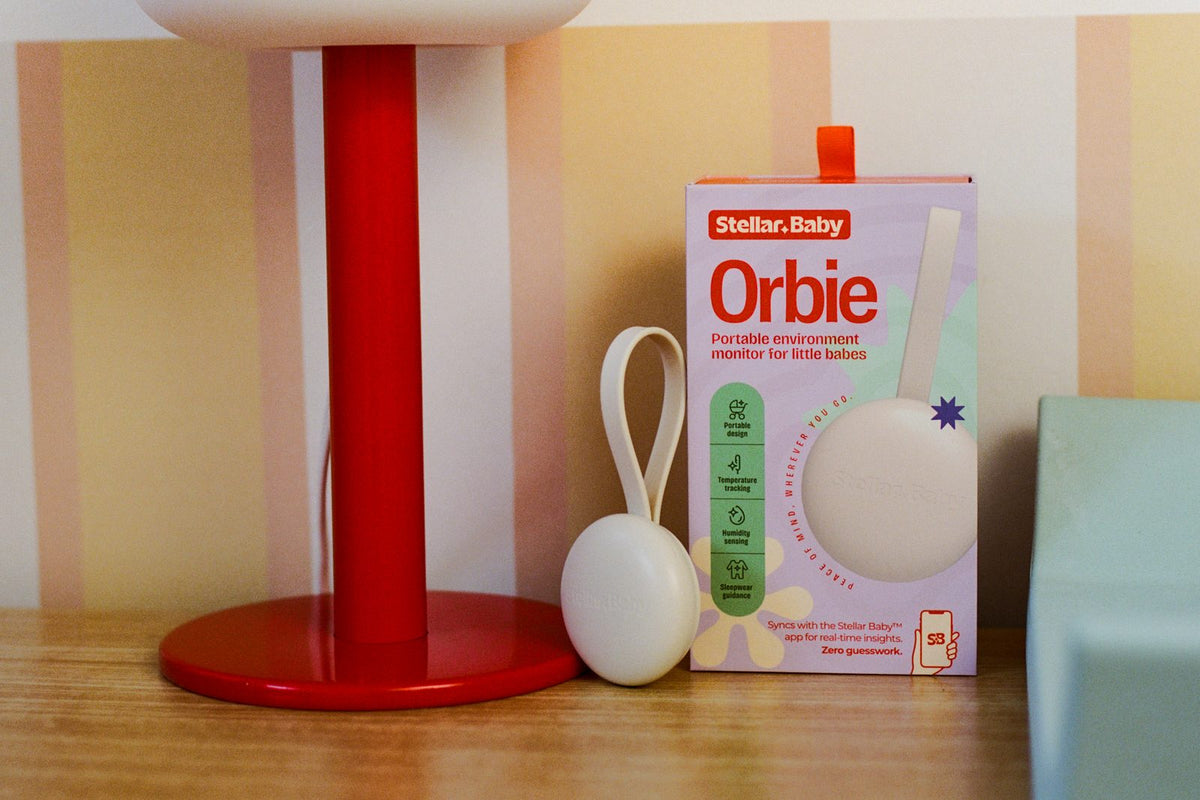
Orbie is a portable environment monitor for babies and toddlers, made by Stellar Baby, an Australian company. It reads the temperature and humidity around your little babe, and the free Stellar Baby app turns them into simple sleepwear and TOG guidance.
The comfortable range stays the same all year; it's the challenge that changes with the seasons.


Zero guesswork, every night
Orbie reads your babe's environment and the app tells you exactly what to dress them in.


